When Activism Turns Reckless: The Santa Ana Incident and the Consequences of Interfering With Federal Law Enforcement
What happened in Santa Ana, California, last week is tragic. It is also entirely predictable.
A 21-year-old activist, now facing permanent blindness in one eye, was seriously injured during an anti-ICE protest that spiraled out of control. Predictably, the story has already been flattened into a simplistic morality tale by sympathetic media outlets and activist groups: innocent protester, brutal federal agents, unchecked authority. But that version of events collapses the moment facts, context, and personal responsibility are reintroduced into the discussion.
This was not a case of someone quietly exercising free speech and being randomly targeted. It was a case of an individual deliberately inserting himself into a volatile law-enforcement operation, ignoring clear warning signs, and making a split-second decision that carried irreversible consequences.
Protests Are Not Immunity Zones
The Santa Ana protest began as many such demonstrations do: loud, emotional, and fueled by outrage over an unrelated incident hundreds of miles away. Demonstrators gathered outside a federal building to denounce Immigration and Customs Enforcement following a fatal encounter in Minnesota. As long as protests remain peaceful and non-interfering, they are a protected form of expression.
But protests do not suspend the rule of law. They do not convert active law-enforcement zones into immunity bubbles. And they certainly do not grant individuals the right to physically intervene when officers are detaining or removing someone.
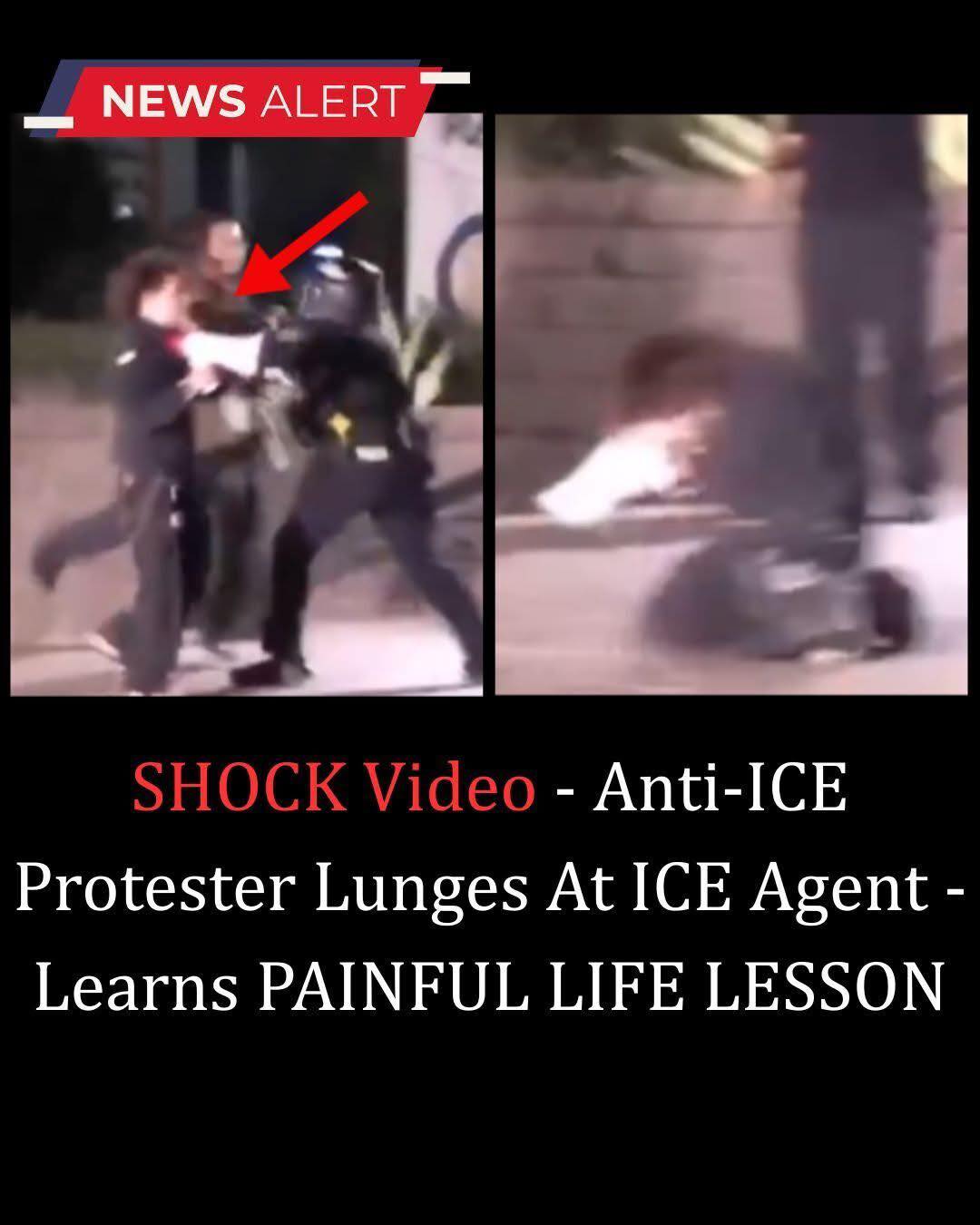
Video footage from the scene shows federal agents attempting to move individuals away from a secured area after tensions escalated. Crowd-control measures were already in use. This was not a calm situation. Officers were in protective gear. Less-lethal munitions had already been deployed. Anyone paying attention could see that the environment had crossed from protest into confrontation.
And yet, at that moment, one demonstrator chose to rush forward.
A Decision Made in Seconds, a Consequence That Lasts a Lifetime
The injured individual, identified as Kaden Rummler, was holding a megaphone when he moved toward a federal agent who was pulling another protester from the crowd. Video shows Rummler advancing directly into the agent’s immediate space. Within seconds, a less-lethal projectile was fired, striking him in the face.
The injury was catastrophic. Surgeons later confirmed permanent vision loss in his left eye, multiple fractures, and embedded debris that could not safely be removed. It is an awful outcome. No rational person takes pleasure in that.
But sympathy should not override clarity.
This was not a random bystander hit while standing still. This was not a journalist clearly identified and complying with orders. This was an individual who moved toward an officer in the middle of a physical enforcement action, during a chaotic scene, while officers were actively dispersing a crowd.
Law enforcement officers are trained to make decisions in fractions of a second, not with the benefit of hindsight or slow-motion video analysis. When someone advances toward an officer during an arrest or extraction, especially amid crowd hostility, that person becomes a potential threat—whether they intend harm or not.
Intent does not negate impact.
“Less-Lethal” Does Not Mean Harmless
A major source of public confusion in incidents like this comes from the misleading term “less-lethal.” Rubber bullets, foam rounds, and similar munitions are designed to reduce the likelihood of death compared to firearms—but they are not toys, and they are not risk-free.
Law enforcement agencies deploy them precisely because crowds can turn violent quickly, and because physical force at close quarters can be even more dangerous. These tools exist to create distance and compliance without escalating to deadly force.
But anyone who has spent five minutes reading police use-of-force policies knows the risks. Serious injury is possible. Permanent injury is possible. That is why officers are trained to use them only when necessary—and why civilians are warned, repeatedly, to move back when they are deployed.
Choosing to rush forward in that moment is not an act of bravery. It is an act of recklessness.
The Manufactured Narrative Problem
Within hours of the incident, familiar phrases flooded social media: “peaceful protester,” “state violence,” “authoritarian crackdown.” Missing from much of the commentary was any acknowledgment of the protester’s own actions.
This is a recurring pattern.
Activist culture increasingly treats law enforcement as illegitimate by default. Officers are framed as aggressors regardless of circumstance, while anyone opposing them is cast as morally righteous. That binary worldview leaves no room for accountability on the protester’s side—and no room for recognizing that federal agents have a legal obligation to enforce federal law.
It also encourages dangerous behavior.
When activists are told repeatedly that ICE agents are “terrorists,” “illegitimate,” or “criminals,” some begin to believe they are justified in physically intervening. That mindset turns demonstrations into flashpoints—and injuries into inevitabilities.
Law Enforcement Is Not a Debate Club
Federal officers are not required to pause enforcement actions for dialogue, slogans, or megaphone speeches. They are not obligated to negotiate with crowds that surround arrests. Their mandate is to secure individuals, maintain order, and ensure their own safety.
When those objectives collide with a hostile crowd, officers must act decisively.
The uncomfortable truth is this: had the agent hesitated, been overwhelmed, or lost control of the detainee, the situation could have escalated far beyond a single injury. Crowd dynamics are unforgiving. Once authority collapses in a moment like that, chaos follows.
The injury in Santa Ana was severe. But it was also contained. No officer was killed. No firearm was discharged. No mass panic occurred. That outcome, harsh as it may sound, is precisely why less-lethal tools exist.
Tragedy Without Martyrdom
None of this means the injured protester “deserved” what happened. That word is unhelpful and cruel. But acknowledging tragedy does not require manufacturing martyrdom.
There is a difference between exercising free speech and physically interfering with law enforcement. There is a difference between peaceful protest and reckless confrontation. And there is a difference between criticizing policy and putting oneself directly in harm’s way.
Adults are responsible for the risks they choose to take—especially when those risks are obvious, immediate, and avoidable.
A Lesson That Should Not Be Ignored
If there is any value to be salvaged from this incident, it is this: rhetoric matters, and actions have consequences.
Telling young activists that federal law enforcement is illegitimate encourages them to take risks they are not equipped to handle. Treating protests as consequence-free spaces breeds false confidence. And pretending that officers can simply “choose not to respond” in volatile situations ignores reality.
This was not a mystery. This was not unforeseeable. It was the predictable collision of ideology, emotion, and poor judgment.
And sadly, one person will live with that collision for the rest of his life.