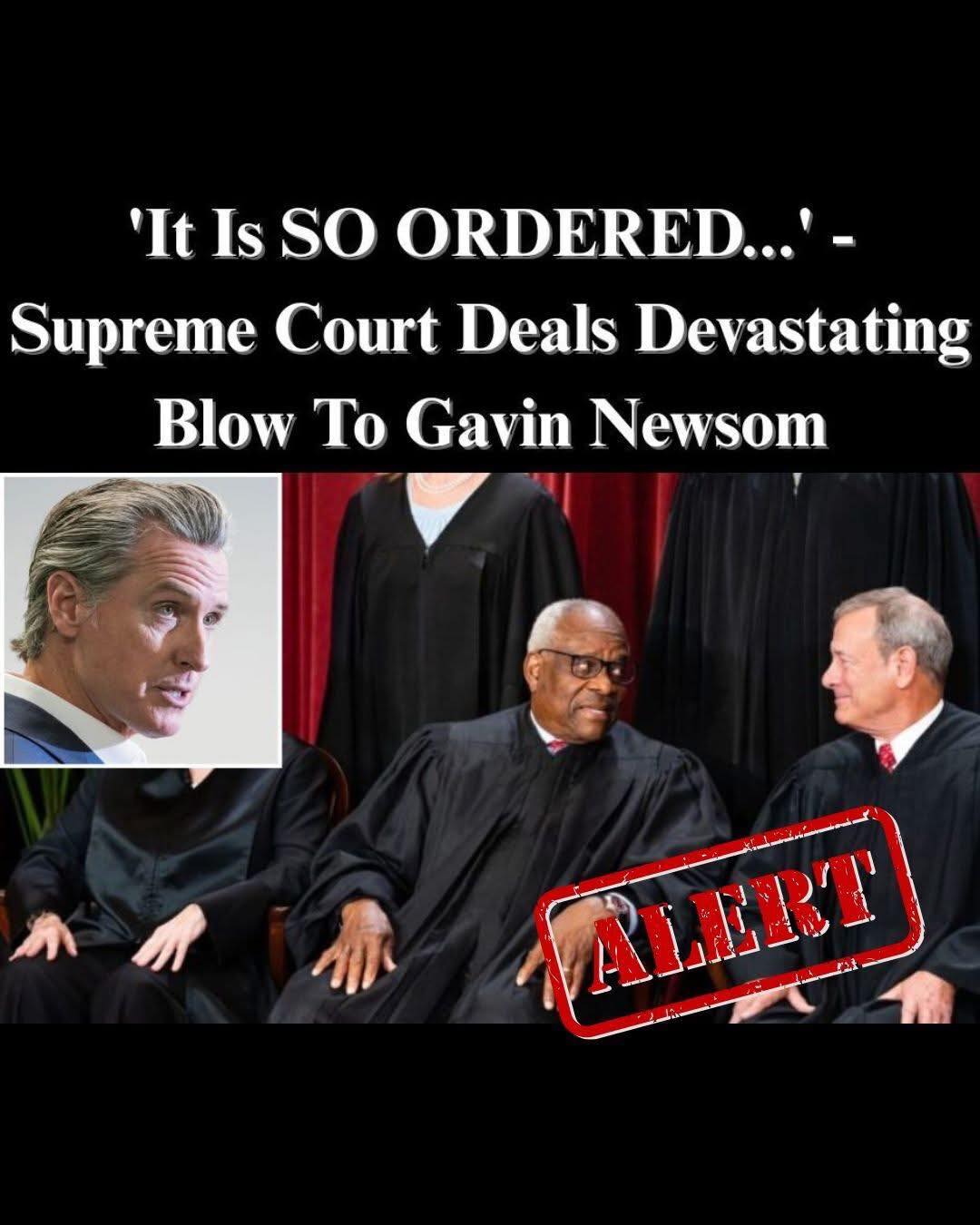
Supreme Court Delivers Major Setback to California’s Electric Vehicle Mandate
In a ruling that could reshape the future of environmental regulation in the United States, the Supreme Court of the United States has dealt a decisive blow to California’s effort to force a rapid transition to electric vehicles. By a 7–2 vote, the Court cleared the way for fuel producers and energy companies to challenge the federal government’s approval of California’s aggressive vehicle emissions rules, striking at the legal foundation of the state’s plan to dominate the auto market with electric vehicles by 2035.
The decision is not a final ruling on the legality of California’s mandate itself. Instead, it addresses a critical threshold issue: whether businesses harmed by the regulations have the right to sue. On that question, the Court was unequivocal. The challengers, it ruled, do have standing—and the case can proceed.
That determination alone represents a major setback for California’s climate agenda, because it opens the door to a broader judicial examination of whether the state’s electric vehicle requirements are lawful under federal statute.
A Rarely Unified Court
What makes the ruling particularly significant is the size and composition of the majority. With seven justices in agreement, the decision crossed ideological lines, underscoring deep concerns about regulatory overreach and procedural fairness.
Justice Brett Kavanaugh, writing for the majority, framed the issue not as a debate over climate policy but as a matter of constitutional access to the courts. When the government imposes sweeping regulations that directly reshape an industry, he wrote, it cannot then argue that the affected parties lack the right to challenge those rules.
In other words, regulators cannot both wield extraordinary power and shield themselves from legal scrutiny.
This principle lies at the heart of the ruling and carries implications far beyond electric vehicles or California’s climate ambitions.
California’s EV Mandate Explained
California’s policy, approved by the Environmental Protection Agency under provisions of the Clean Air Act, requires automakers selling vehicles in the state to dramatically reduce average greenhouse gas emissions across their fleets. As part of that framework, manufacturers must ensure that a growing percentage of their vehicles are electric, culminating in a market overwhelmingly dominated by EVs by 2035.
Supporters of the mandate argue that California, due to its size and economic influence, has both the responsibility and the leverage to lead the nation toward “carbon neutrality.” The policy has been championed by Governor Gavin Newsom, who has made climate action a defining feature of his administration and a cornerstone of his national political profile.
Critics, however, contend that the mandate amounts to industrial coercion. They argue it forces automakers, fuel producers, and consumers into a rapid transformation that may not be technologically feasible, economically sustainable, or legally authorized.
Why Standing Matters
At first glance, a ruling about “standing” may sound procedural or technical. In reality, it is often the most important battlefield in regulatory litigation.
Standing determines who gets into court at all. By arguing that fuel producers were merely indirect bystanders to California’s EV rules, the EPA sought to shut down the lawsuit before any judge could evaluate the substance of the challenge.
The Supreme Court rejected that argument outright. The justices found that regulations designed to suppress demand for gasoline and diesel predictably harm fuel producers in concrete, measurable ways. That harm, the Court said, is sufficient to establish standing under Article III of the Constitution.
This reasoning reflects a broader judicial trend: skepticism toward efforts by federal agencies to avoid accountability by narrowing who counts as an “injured” party.
Shifting Legal Ground at the EPA
Another factor that weighed against the government was inconsistency. Justice Kavanaugh noted that the EPA has repeatedly changed its legal interpretation of whether the Clean Air Act authorizes California to regulate greenhouse gas emissions from new vehicles in this manner.
Such shifts, while not uncommon in administrative agencies, undermine claims of settled authority. When an agency itself appears unsure of the scope of its power, courts are far less inclined to defer.
That point may loom large as the case proceeds. If the EPA cannot articulate a clear and consistent statutory basis for approving California’s mandate, the underlying regulation could face serious jeopardy.
Broader Implications for Federalism
The ruling also touches on a long-running tension between state autonomy and federal uniformity. California has long enjoyed special treatment under the Clean Air Act, allowing it to set vehicle emissions standards more stringent than those of the federal government.
Other states often follow California’s lead, meaning that a single state’s policy can effectively shape national markets.
Critics argue that this arrangement allows California to function as a de facto national regulator, imposing costs and constraints on industries and consumers far beyond its borders. The Supreme Court’s decision does not eliminate California’s special status—but it signals that such power will not be immune from judicial scrutiny.
Political Fallout
The decision lands amid a broader political shift in Washington. Earlier this month, President Donald Trump signed resolutions aimed at rolling back key elements of California’s climate agenda, framing the issue as one of consumer choice and economic realism rather than environmental ideology.
Taken together, the Court’s ruling and the administration’s actions represent a coordinated challenge—judicial and political—to the idea that aggressive climate mandates can be imposed without resistance or consequence.
For Governor Newsom, the timing is particularly unwelcome. As a figure frequently mentioned in national political conversations, his climate policies are now facing sustained pushback on multiple fronts.
What Happens Next
With standing established, the lawsuit will return to the lower courts, where judges will finally address the core question: does federal law actually authorize California’s electric vehicle mandate?
That inquiry will involve close examination of the Clean Air Act, congressional intent, and the limits of agency discretion. The outcome is far from certain, but the challengers now have a clear path forward—something the EPA sought to deny them.
Even if California ultimately prevails, the process itself could delay implementation, create uncertainty for automakers, and embolden other industries to challenge similar regulatory schemes.
A Turning Point for Climate Regulation?
Beyond the immediate case, the ruling may mark a turning point in how courts view ambitious climate policies imposed through administrative action.
The Supreme Court has repeatedly emphasized that major economic and political decisions require clear authorization from Congress. Policies that effectively restructure entire industries are increasingly viewed through that lens.
California’s EV mandate fits squarely into that category. Whether it survives judicial review will depend not on its environmental goals, but on whether lawmakers—not regulators—actually granted the authority to pursue them.
Conclusion
The Supreme Court’s decision is more than a procedural win for fuel producers. It is a reaffirmation of a fundamental principle: power invites accountability.
By rejecting efforts to block judicial review, the Court has ensured that California’s electric vehicle mandate will face a full legal reckoning. Supporters may still defend the policy on environmental grounds, but they can no longer avoid the question of legality.
For regulators nationwide, the message is clear. Ambition does not override the Constitution, and policy goals—however well intentioned—must rest on firm legal foundations.
The era of regulation by assumption may be coming to an end.